Reviewer and Operator Actions
The actions on this page appear only when granted by the instance configuration and can be restricted by environment or service scope.
Review requests
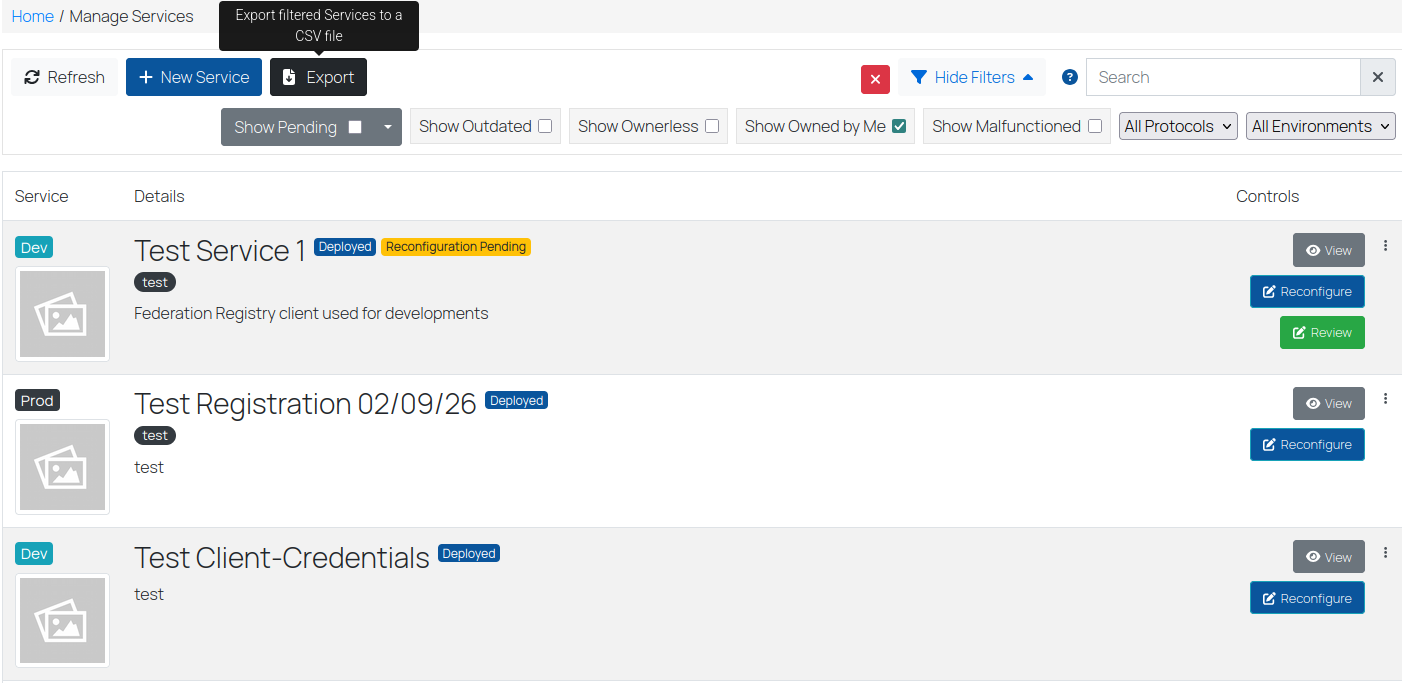
Use the pending-request filter in Manage Services, open Review, and inspect the complete proposal. For a reconfiguration, pay particular attention to the highlighted differences from the approved configuration.
- Approve accepts the request and, after any additional approval stage, starts deployment.
- Request changes returns it to the owners. Add a clear comment describing the required corrections.
- Reject closes the request without altering the approved configuration.
See Review a service request for the full workflow.
Investigate deployment failures
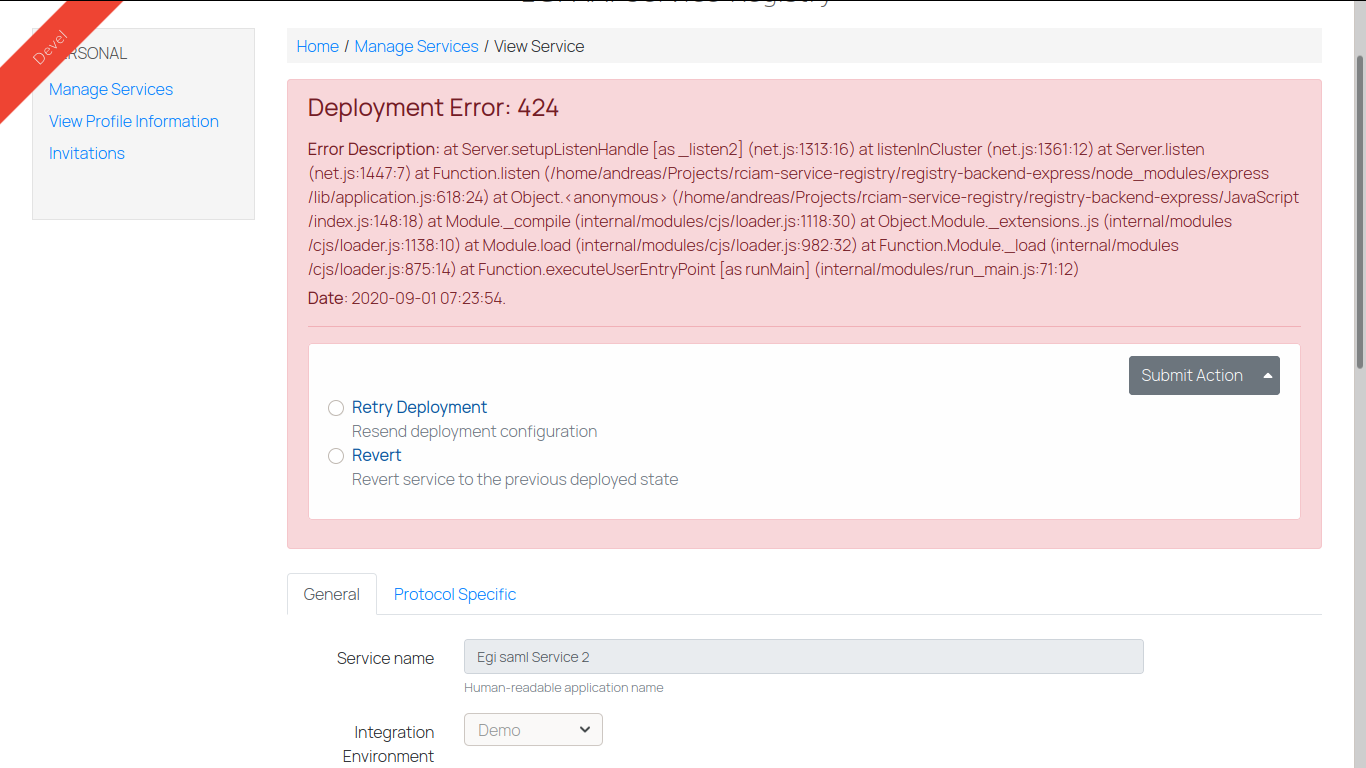
Filter or locate a service with a deployment malfunction indicator, open the service, and inspect the error panel. Choose a recovery action only after confirming that it matches the reported failure. Approval has already occurred at this stage; submitting another request does not repair the failed operation.
Deployment error details and recovery actions
Manage tags
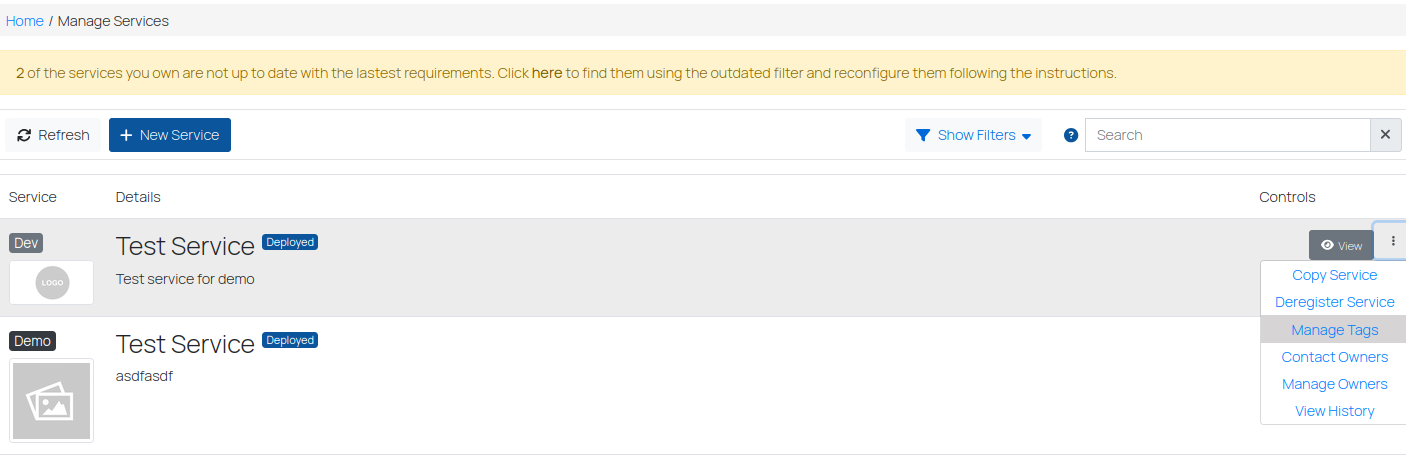
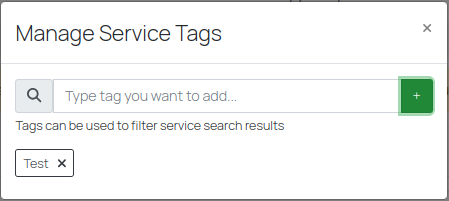
Tags provide a consistent way to categorise services and support filtering and reporting. From the tag management page, authorised users can create, edit, or remove the configured tags. Before removing or renaming a tag, consider its use on existing services and in operational reports.
Tag management option
Tag management window
Export service data
The export action produces a CSV file from the services currently selected by the list filters. Apply the intended tenant, environment, status, ownership, or tag filters first, check the visible results, and then export. Treat the file as operational data and share it according to the tenant's data-handling rules.
Filtered service-data export
Send a broadcast notification
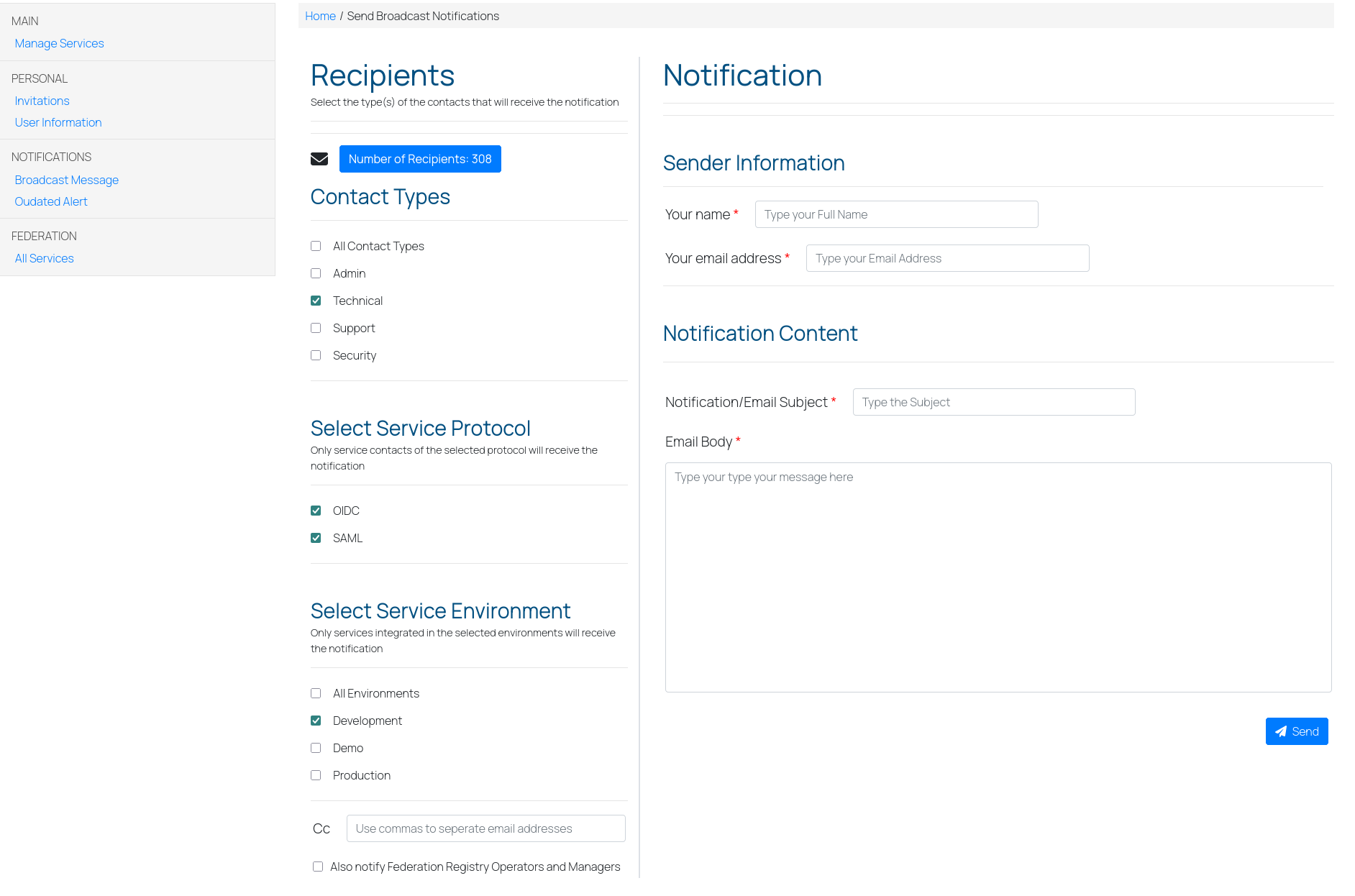
The Broadcast Message page sends an email notification to contacts of services matching the selected criteria. The displayed Number of Recipients changes with the selection and should be checked before sending.
- Under Contact Types, select one or more recipient roles: Admin, Technical, Support, or Security. Use All Contact Types only when the message applies to every registered contact.
- Under Select Service Protocol, select OIDC, SAML, or both.
- Under Select Service Environment, select the relevant integration environments or All Environments.
- Optionally add comma-separated addresses to CC and select Also notify Federation Registry Operators and Managers when they should receive the same message.
- Enter the sender's name and email address, followed by the notification subject and email body. These fields are required.
- Recheck the recipient count and all filters, then select Send.
Contact-type, protocol, and environment filters are combined. A broad selection can notify contacts for many services, so confirm the scope and avoid including credentials or service secrets in the message.
Broadcast notification form
Notify owners of outdated services
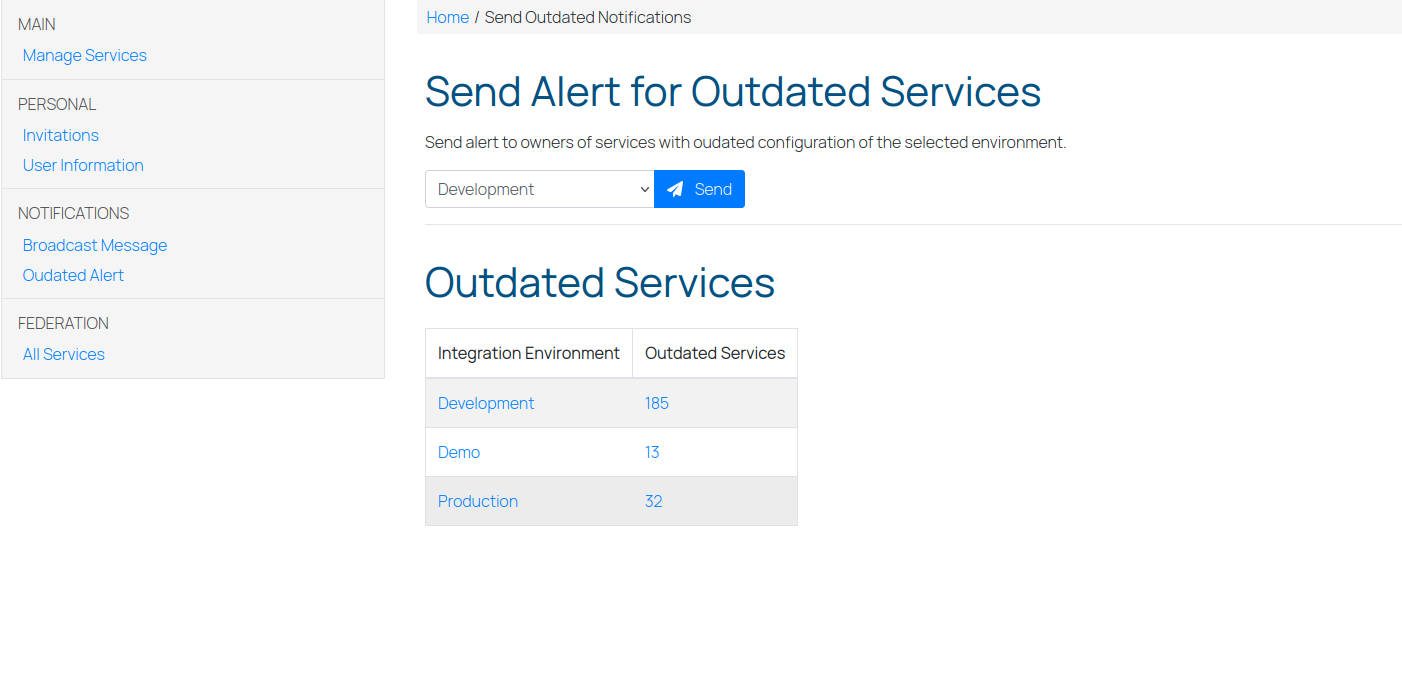
The Outdated Alert page is dedicated to reminding owners whose services no longer satisfy the current technical or policy rules. The Outdated Services table shows the number of affected services for each integration environment. Review these counts before sending a notification.
- Select the target integration environment from the dropdown.
- Confirm that the selected environment and its outdated-service count are the intended scope.
- Select Send to notify the owners of outdated services in that environment.
Notifications are sent one environment at a time. They do not change a service or create a request; each owner must open the flagged service, correct the highlighted fields, and submit a reconfiguration request. See Update an outdated service.
Outdated-service notification page