Services and Service Requests
Manage Services
Open Manage Services from the side menu to see the services available to you. Each entry shows summary information such as the service name, description, target environment, request state, and deployment state. The actions shown on an entry depend on the state of the service and on your permissions.
Use the search box and filters to narrow the list. For example, you can filter for services with pending requests, deployment failures, or outdated configurations.
Manage Services list and available actions
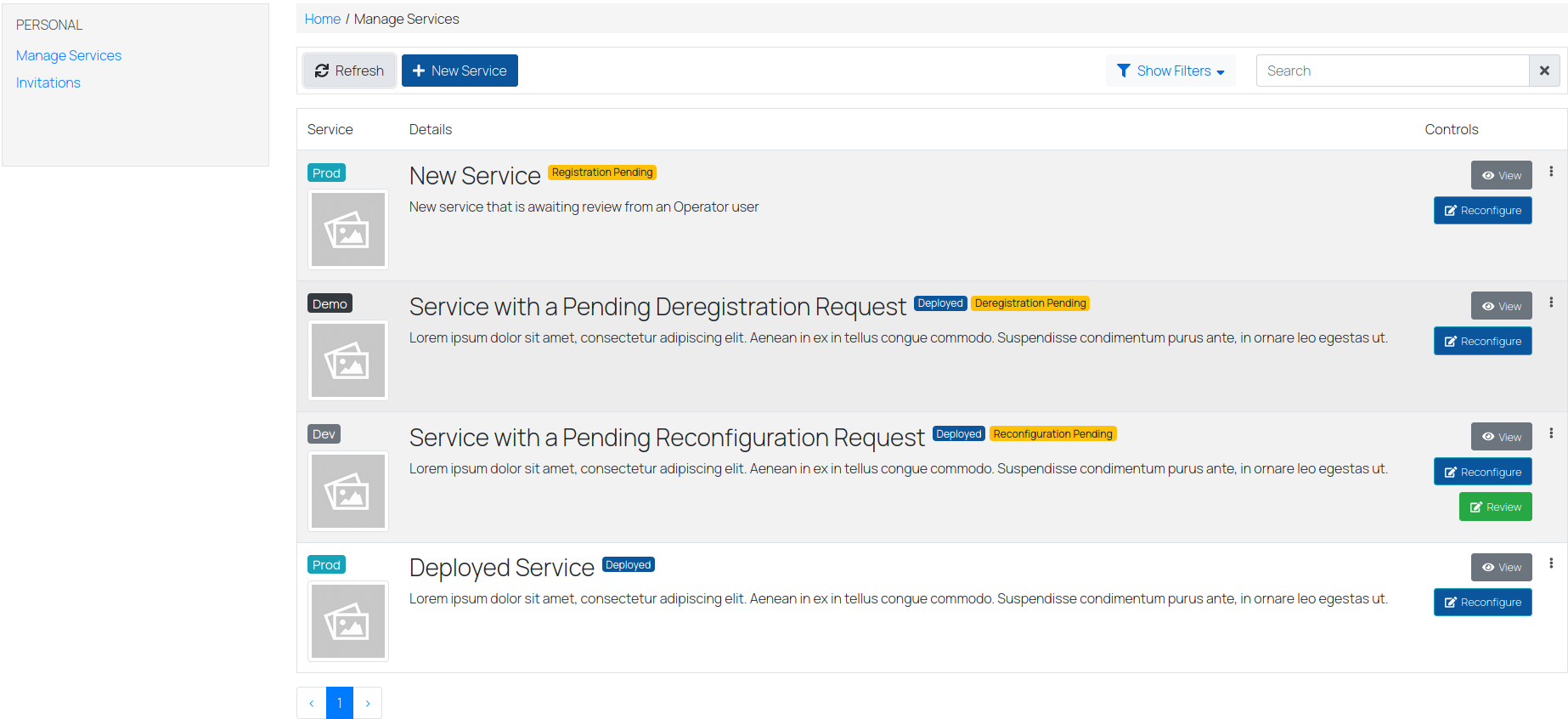
A service request proposes a change. The currently approved configuration remains distinct from that request until it is approved and deployed. There are three request types:
- Registration creates a new service.
- Reconfiguration changes an existing service.
- Deregistration removes an existing service from the target environment.
View a service
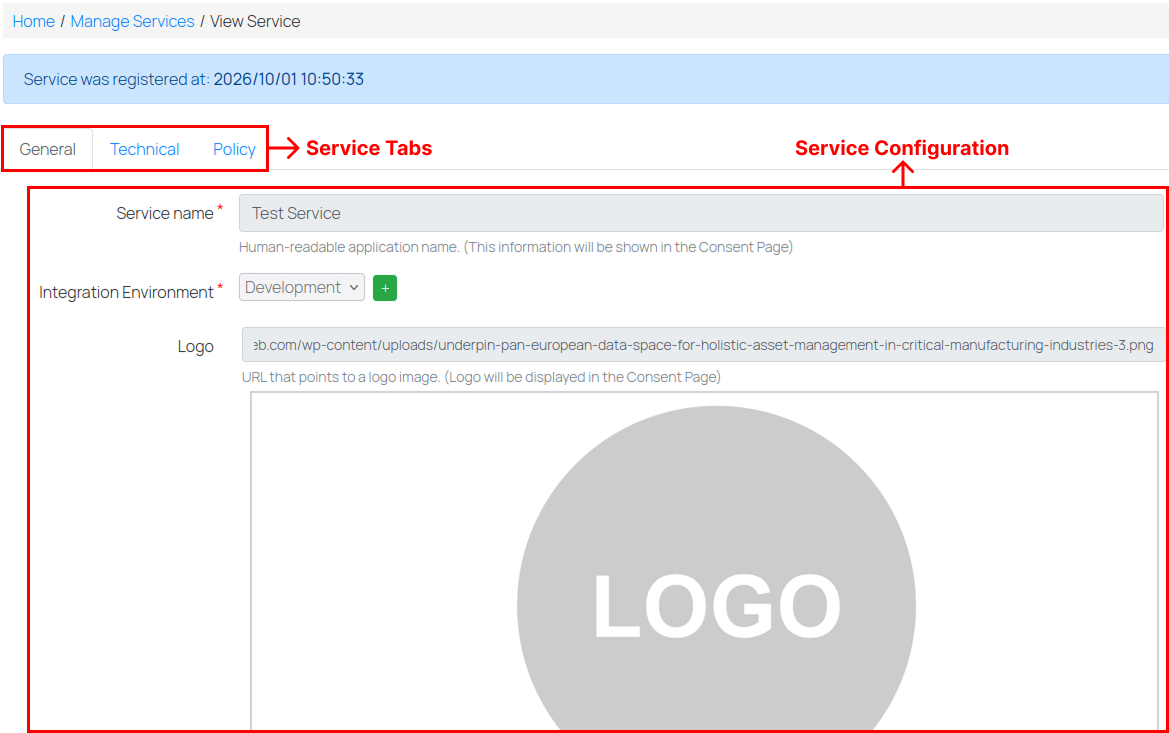
Select View on a service entry to inspect its complete configuration. The view is divided into the same sections as the request form:
- General contains identification, descriptive, contact, and environment information.
- Advanced contains the Configuration Profile and the applicable OIDC or SAML configuration.
- Policy contains the policy information applicable to the service.
Service configuration view
Register a service
- Select New Service on the Manage Services toolbar.
- Complete the General tab.
- In the Advanced tab, first choose the Configuration Profile that describes the service. The form then reveals the relevant fields.
- Complete any applicable fields in the Policy tab.
- Resolve the validation messages shown on the tabs and submit the request.
General tab
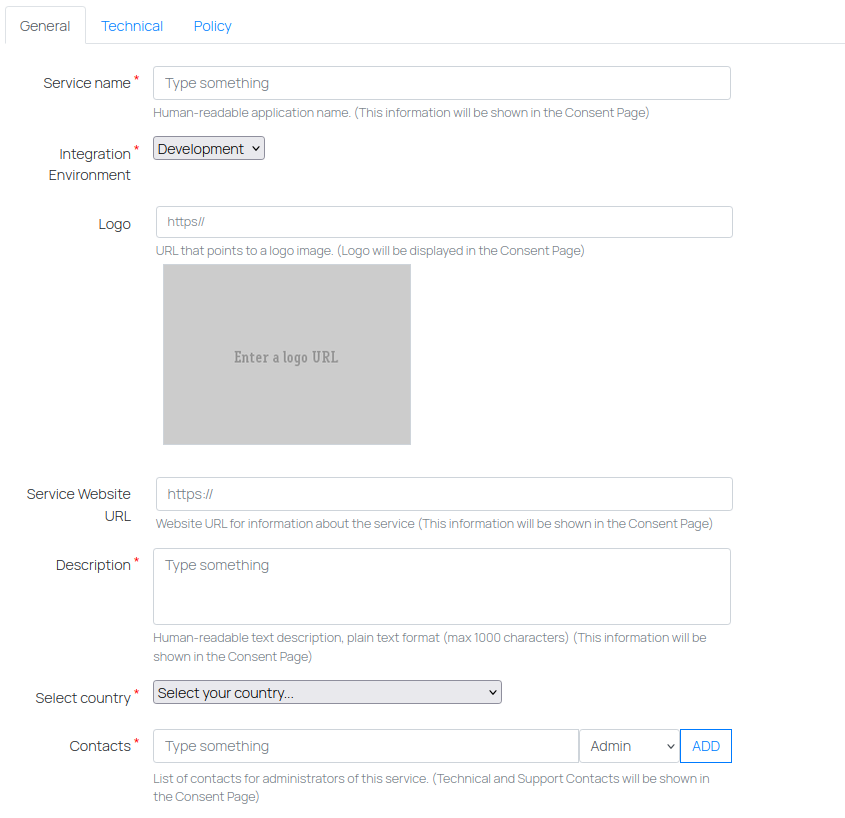
Provide the service identity and descriptive information requested by the tenant. This normally includes the service name, description, target integration environment, website or logo information, and contacts. Required fields can vary by environment.
General tab of the registration form
Advanced tab and Configuration Profiles
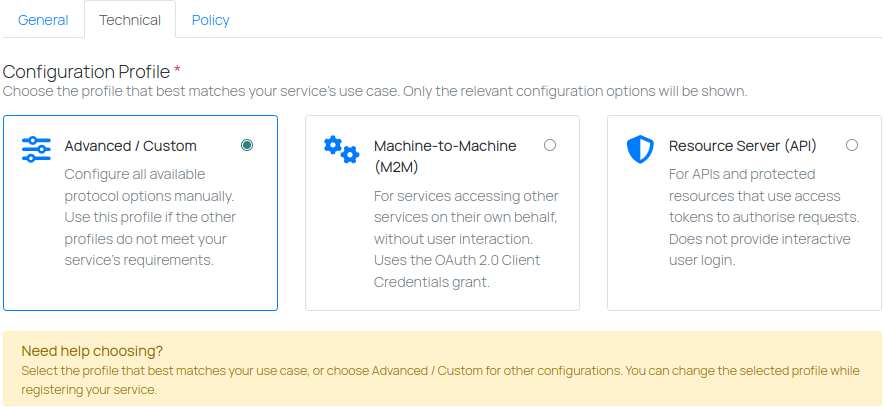
Select a Configuration Profile before entering the technical configuration:
- Machine-to-Machine (M2M) is for a client that accesses another service on its own behalf, without an interactive end user. It uses the OAuth 2.0 Client Credentials grant.
- Resource Server (API) is for an API or protected resource that accepts access tokens and does not provide interactive user login.
- Advanced / Custom exposes the configurable protocol options for services that do not fit the predefined profiles.
The selected profile determines which fields and allowed values appear. For an Advanced / Custom configuration, select OIDC or SAML and complete the fields revealed for that protocol. Further OIDC fields can appear according to the selected grants and client authentication capabilities.
Configuration Profile selector
Typical OIDC information includes redirect URIs, scopes, grant types, client authentication, token introspection, refresh-token, and PKCE settings. Typical SAML information includes the entity ID, metadata source, and requested attributes. The exact fields and defaults are tenant- and environment-specific.
Policy tab
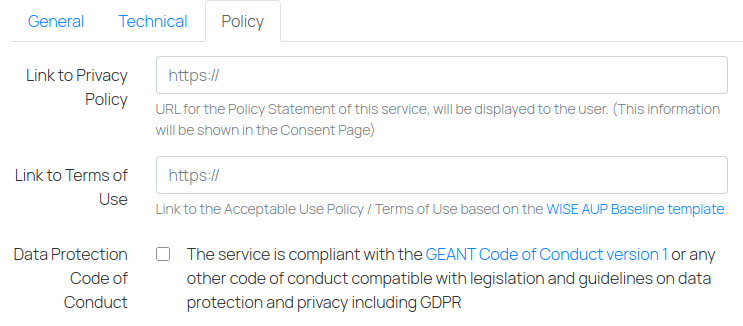
Complete the privacy policy, terms of use or acceptable use policy, and any other policy fields required by the tenant. Some fields are shown only when the selected protocol and grants describe a user-facing service.
Policy tab and applicable policy fields
Reconfigure a service or edit an open request
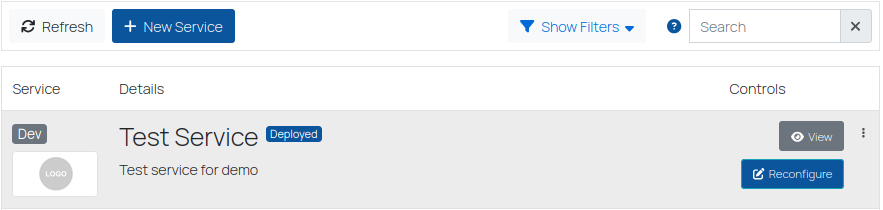
Use the search and filters to locate the service, then select Reconfigure. If no request is open, the form starts from the approved configuration and a submission creates a reconfiguration request. If a request is already open, the same action opens that request for editing.
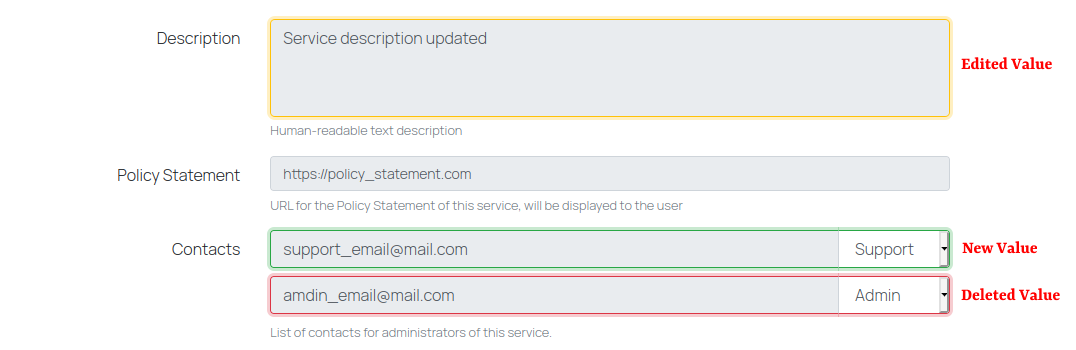
Change the required fields, review all tabs for validation errors, and submit. During review, changed fields may be highlighted so reviewers can compare the proposal with the approved configuration.
Create Reconfiguration request
Deregister a service
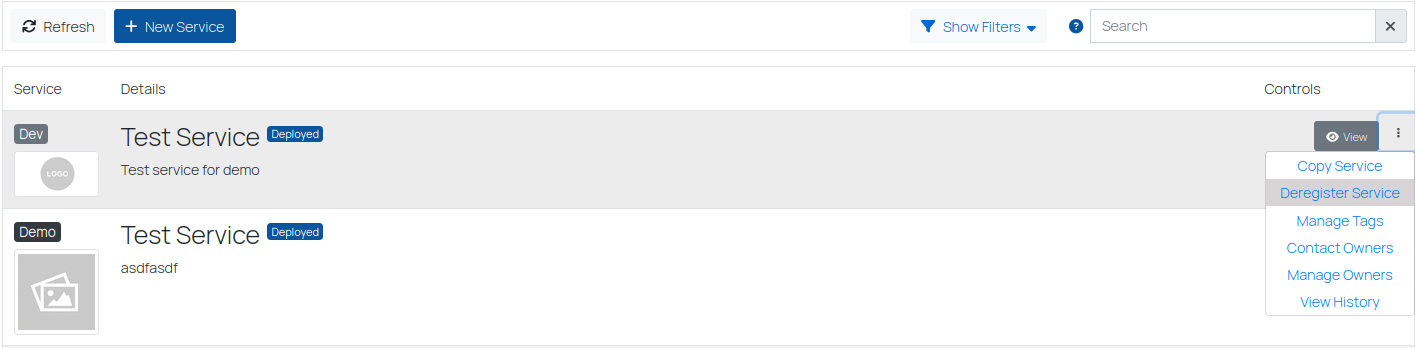
Locate a deployed service, open its More options menu, and select Deregister Service.
Deregister a service
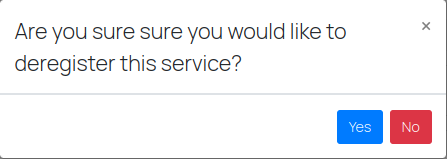
Review the confirmation carefully and submit the deregistration request. The service is removed from the target infrastructure only after the request is approved and deployment succeeds.
Deregistration request confirmation
Cancel a pending request
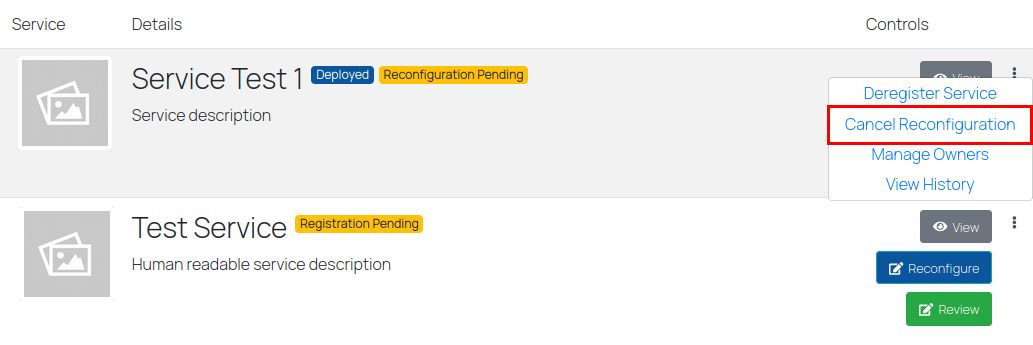
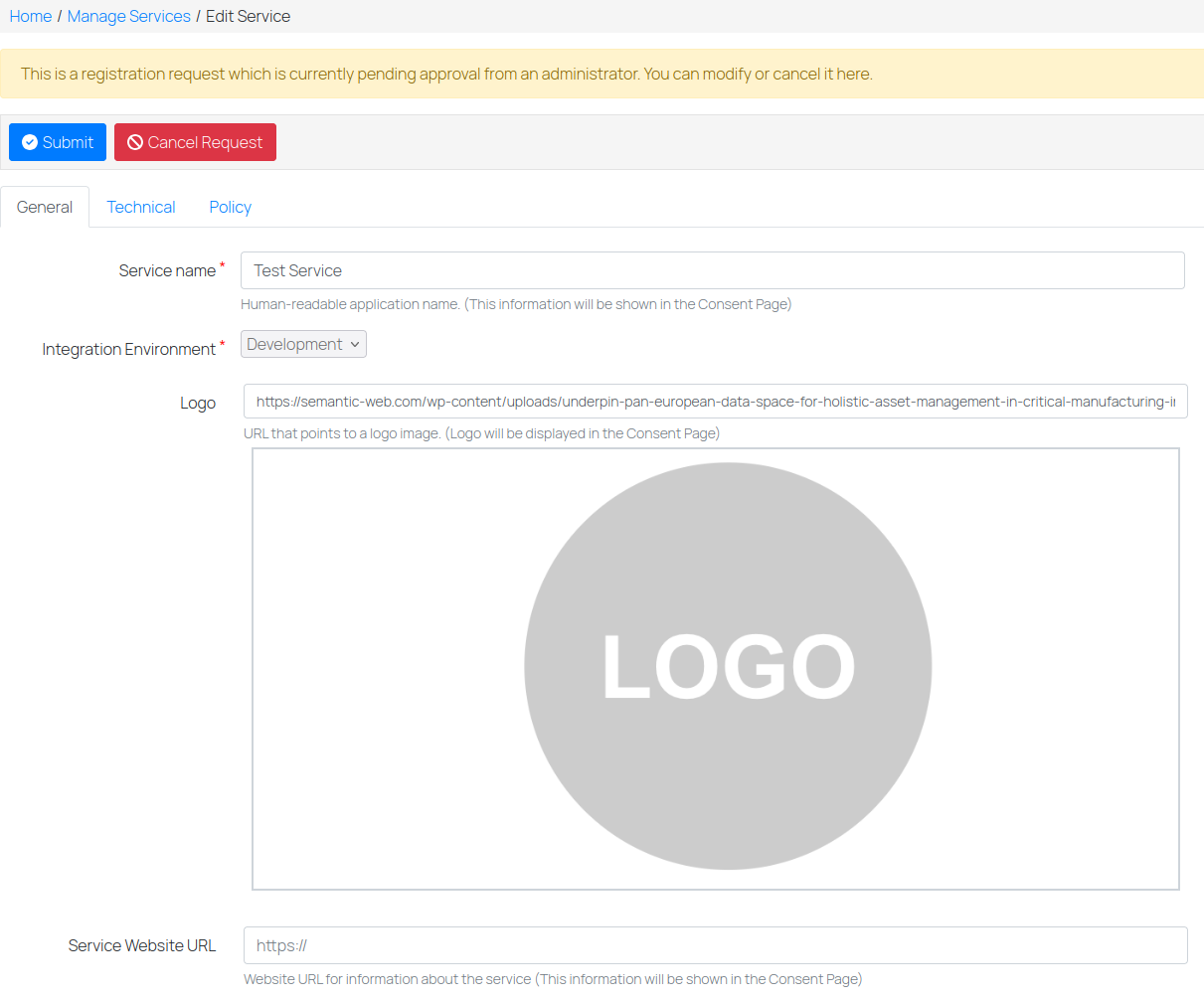
You can cancel a pending request from the service's More options menu or from the request edit page. Cancellation discards the proposed request; it does not remove the currently approved and deployed configuration.
Cancel Request action in the service list
Cancel Request action on the request edit page
Respond to requested changes
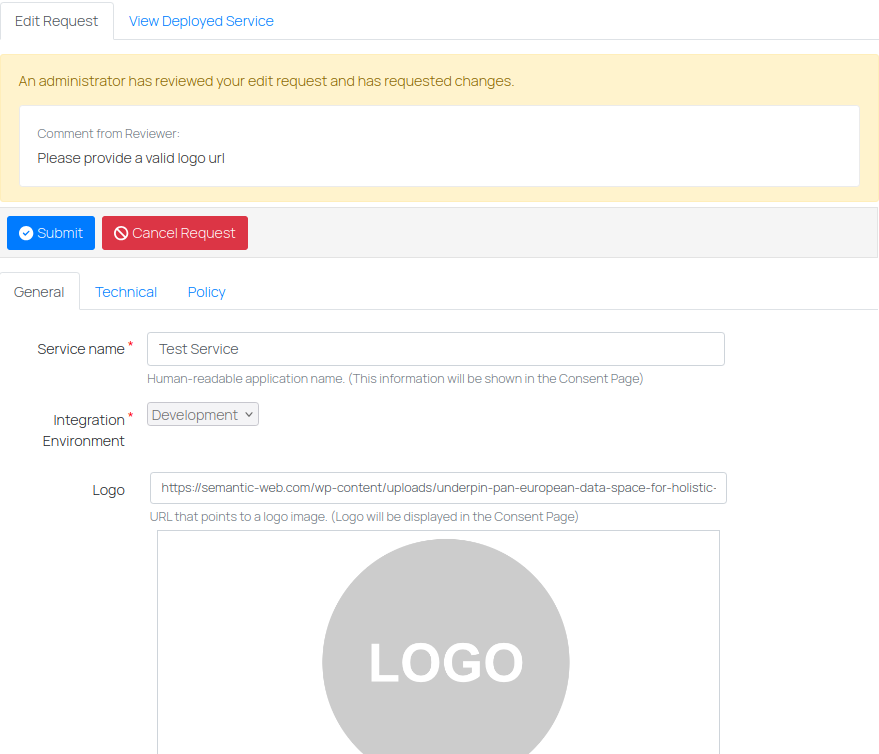
A reviewer can return a request with a comment describing required changes. Service owners are notified by email, and the service is marked Changes Requested in the list.
Reviewer requested changes
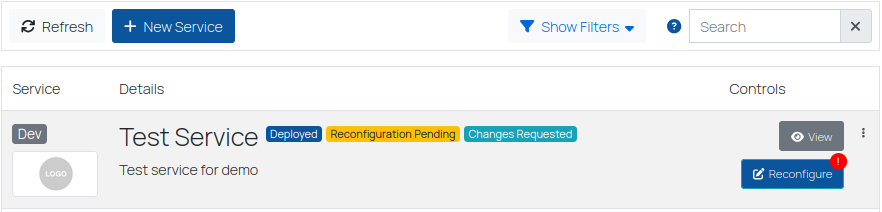
- Select Reconfigure on the marked service to reopen the request.
- Read the review comment and update the request.
- Resolve any validation errors and resubmit it.
Resubmission returns the request to pending review; it does not approve or deploy it automatically.
Request with reviewer comments and Changes Requested status
Copy a service to another environment
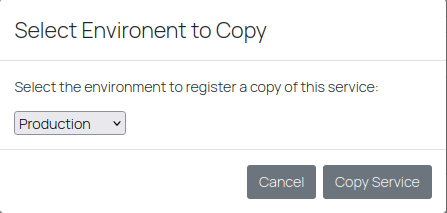
When the tenant provides multiple integration environments, the copy action can use an existing service as the starting point for a registration in another environment. Select the target environment, review the copied values, and edit environment-specific endpoints, contacts, or policies before submitting. The result is a new registration request and still requires review.
Copy service action

Copy service dialog
Manage ownership of a service
Every service has an owners group. The user who submits the registration is added automatically as a group manager. Group members can view and manage the service according to their permissions; group managers can also manage group membership.
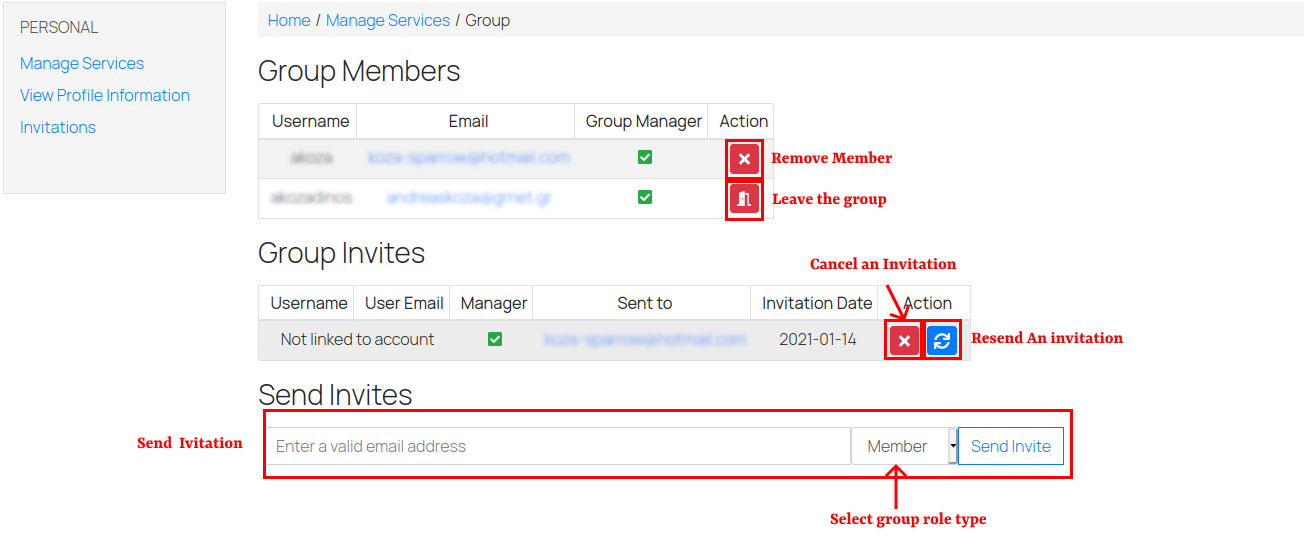
Open More options for the service and select Manage Owners. From the owners page, an authorised user can:
- View members and their group role;
- Invite a user by email as a member or group manager;
- Inspect, resend, or renew pending invitations;
- Remove a member
- Leave the group, provided the group retains at least one member and manager.
Service owners-group management page
See Invitations for the recipient's workflow.
View service history
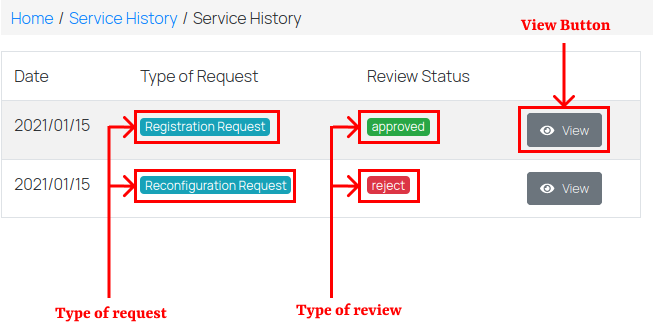
After a service has been registered, select View History from its More options menu. The history lists reviewed requests in chronological order, starting with registration. Open an entry to see the complete configuration snapshot associated with that request.
Service request history
Review a service request
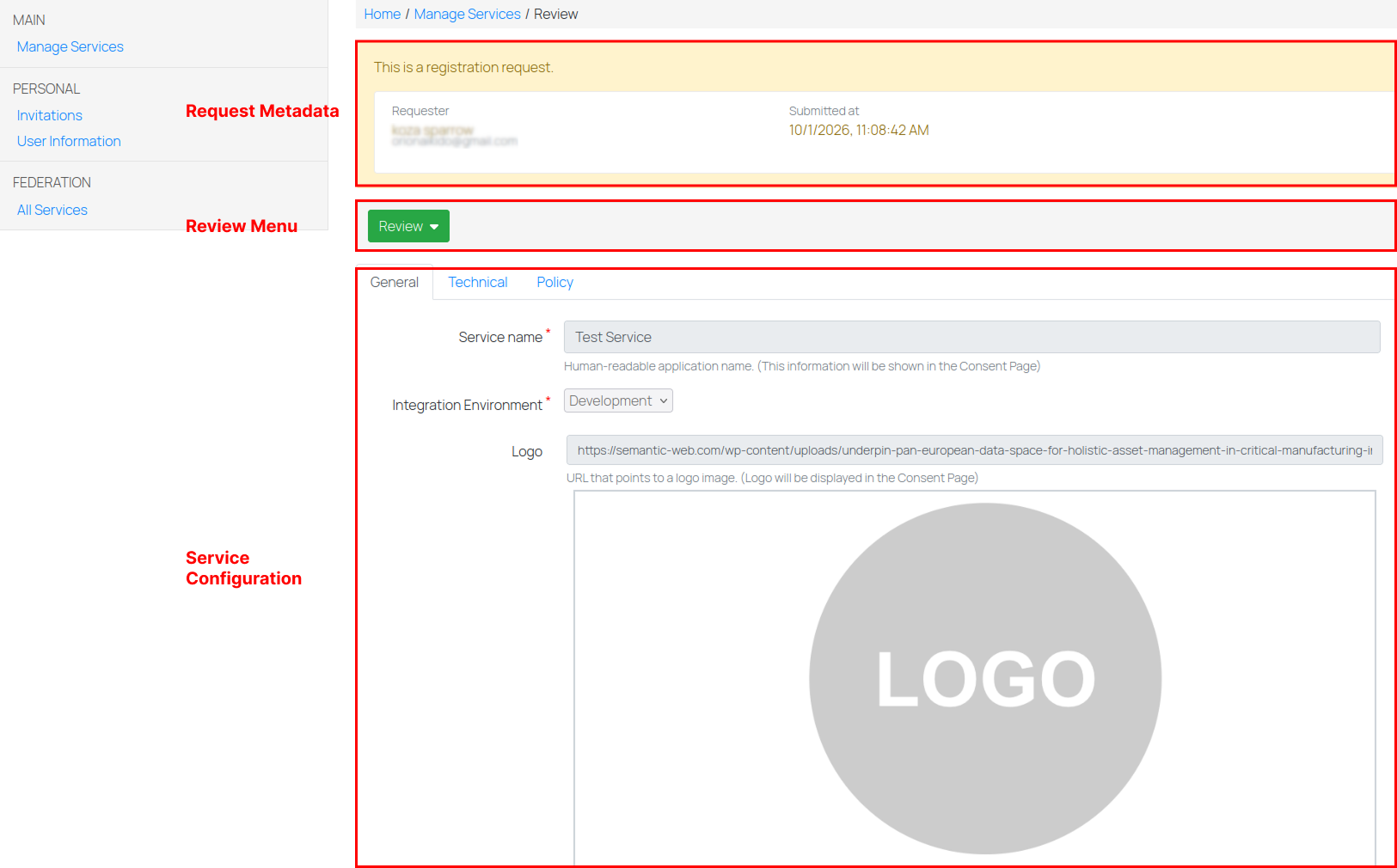
This action is visible only to users who have the required review permission for the service and environment. Use the pending-request filter to find work, then select Review on a service.
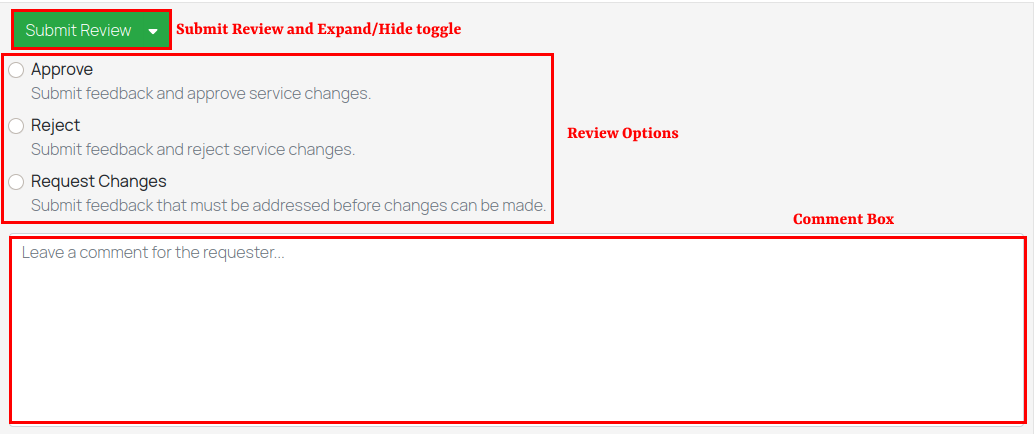
Inspect the full request and, for reconfiguration, the highlighted differences. The available decisions are:
- Approve accepts the request and starts deployment.
- Request changes returns it to the owners with a comment explaining what must be corrected.
- Reject closes the request without changing the approved configuration.
Some tenants use more than one approval stage for restricted environments. In that case, the request proceeds to the next review stage before deployment. Reviewers and owners receive email notifications at the configured stages.
Service request review page
Reconfiguration review with highlighted changes
Review decision panel
Integration environments
A tenant can expose several environments, commonly for development, testing, and production. Each environment can have different endpoints, validation rules, policy requirements, and review stages. Select the environment that matches the intended use of the service and do not assume that values accepted in one environment are valid in another.
After the final approval, follow the service's deployment state as described in Deployment Process.